Welcome to my studio page! I’m very excited to open up my studio to take on more students to share my love of music. Fortunately, I have had very good friends and excellent first students the past 8 months, that convinced me that this could be more than a passing hobby. I’m especially looking forward to adding more components to the simple lesson structure that we’ve been doing, to add on recitals and possibly group lessons later on. The more the merrier!
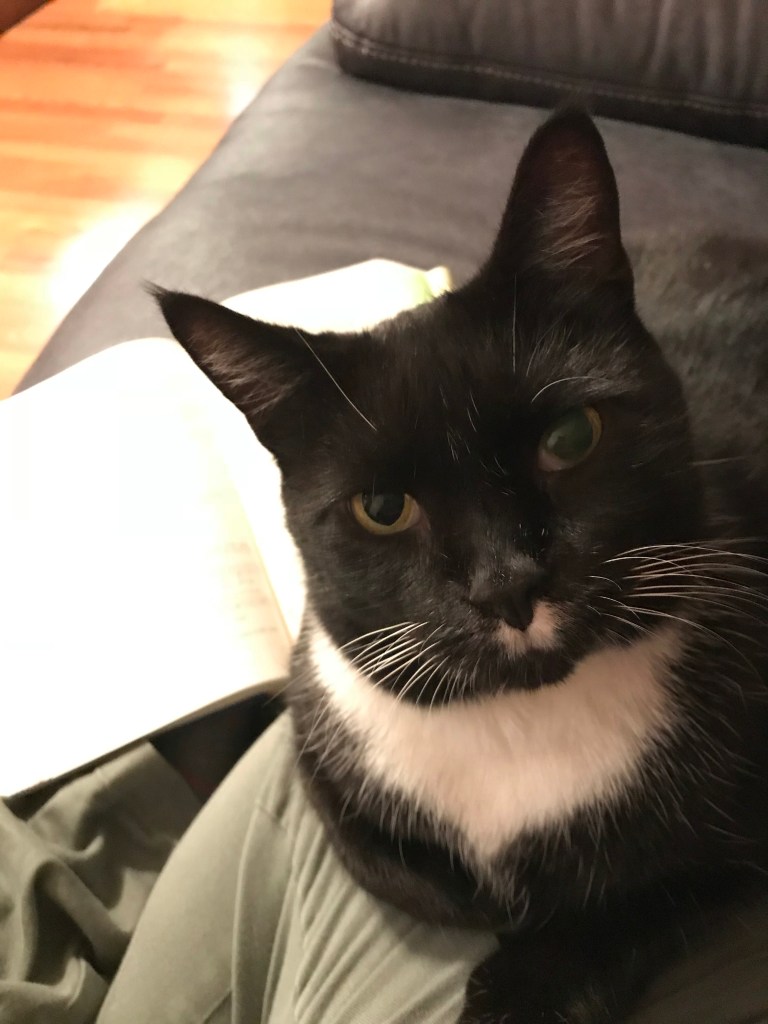
I have a menagerie of animals that are now used to a little foot traffic and strangers playing their piano, but they are happy to share. You will be sure to meet Meeko, he is my self-designated butler and ushers visitors to and from the door. He at times will also sit and soak in the music – my finest critic!
Recitals are an exciting part of learning piano, an essential that I am eager to turn into reality. There is so much reward in preparing a piece to perform, a practice I believe accelerates and affirms students as they learn piano! In classical music training, memorizing a piece is generally accepted as an expectation for all piano students. This can be very daunting for some students just starting out, especially adults – admittedly, it is very daunting for me as well!
But it’s important to consider what your goals are in learning piano, and I definitely want to emphasize that playing pieces from the page can be just as rewarding of an experience. Memorizing actually isn’t always necessary depending on what you are trying to accomplish, and many students can still perform their recital piece from the book. What memorizing the music can do for you, is allow you to enter fully into the emotion and focus on dynamics, speed, movement, pauses, and all other things that breathe more life into musical performance. You’ve already done the hard work and thoroughly learned the notes.
What is a possible downside to memorization is that playing can become rote, mechanical, unexciting. A balance needs to be struck of keeping a piece fresh and interesting for the performer, and thorough knowledge of the composition, to be performed admirably.
Yes, there are rules of music you need to learn, but knowing the rules and the technique actually help you become a better, more musical, performer. Performers don’t always sound the same, for a good reason. Playing music is about expressing what your feelings are, what you like about a piece, and (within reason and respect to the intentions of the composer), what you are trying to communicate in the music. And that personal expression is the beauty of music!
 South Funk Studio